


Is your backyard oasis starting to look a little… tired? That dull finish or those rough patches can really take away from your swimming enjoyment. You might even worry about leaks or further damage.
We understand these concerns. In fact, a recent survey found that most pool owners put off resurfacing, often leading to bigger, more expensive issues down the line. We want to help you avoid that. This guide breaks down everything you need to know about getting your pool looking brand new again.
Here’s what we’ll cover:
- When your pool needs a new surface
- Different pool surface types
- Your best resurfacing material options
- How we resurface a pool, step-by-step
- What resurfacing your pool actually costs
Sublime Pools & Spa has over two decades of experience helping families just like yours. We bring our family values to every job, making sure your pool gets the care it deserves.
Common Signs of Pool Deterioration
Is your swimming pool showing its age? Over time, even the most pristine pool surfaces begin to wear down. Recognizing the signs early can save you a lot of headache and money down the line. We help many pool owners bring their pools back to life, catching problems before they become major issues.
You don’t need a magnifying glass to spot problems. A quick look at your pool’s finish often tells the story. Keep an eye out for these tell-tale signs:
- Rough Spots or Abrasions: Does your pool feel like sandpaper underfoot? A smooth texture is key for comfort and preventing scrapes. If you notice rough spots, it’s a clear sign your pool surface is eroding. This is particularly common with older plaster finishes.
- Cracks and Leaks: Hairline cracks can be minor, but structural cracks are a serious problem. They can lead to significant water loss and even damage the pool’s structure. If you’re constantly refilling your pool, a crack in the existing surface might be the culprit.
- Stains and Discoloration: Are there stubborn stains that just won’t budge, no matter how much you scrub? Or perhaps you’re seeing an uneven texture discoloration across the entire surface. This can happen with plain plaster or even older pool paint. Rust stains, for instance, are notoriously tough to remove and often point to underlying issues.
- Flaking or Peeling Material: This is a big red flag. When your pool finish starts to flake or peel, it means the existing surface is failing. Whether it’s pool paint or plaster, the material isn’t bonding properly anymore. You might see loose plaster or bits of your old finish floating in the pool water.
- Algae Growth That Won’t Quit: Persistent algae, even after diligent chemical treatments, can mean your pool surface is too porous. An aged or damaged surface provides perfect breeding grounds for algae, making it incredibly difficult to keep your pool clean and inviting.
Catching these issues early is vital. Ignoring them usually leads to higher pool resurfacing costs later on. Our team at Sublime Pools & Spa specializes in assessing your pool’s condition and recommending the right solution. We ensure the new material bond properly, giving you a beautiful and durable pool finish.
Different Pool Surface Types

Before you consider pool resurfacing options, it helps to know the main types of pool surfaces out there. Each kind has its own characteristics, benefits, and challenges when it comes to longevity and repair. Understanding your pool type is the first step in any successful pool resurfacing project.
Vinyl Liners
Vinyl liners offer a smooth surface that feels great under your feet. These are custom-made sheets that fit snugly into the pool shell. They are popular for their quick installation and lower initial pool costs compared to other types.
- Pros: Generally, an easy-to-clean surface, resistant to algae due to their non-porous nature, and can be replaced fairly quickly.
- Cons: Can be susceptible to tears or punctures, and direct sunlight or harsh pool chemicals can cause fading over time. When it’s time for a refresh, it’s typically a vinyl liner replacement, not a resurfacing in the traditional sense.
Fiberglass Pools
Fiberglass pools come as a single, pre-formed shell. They boast a very smooth texture, which makes them comfortable and resistant to algae growth. The existing surface is typically a gel coat, which gives the pool its color and finish.
- Pros: Highly durable, non-porous, and require less maintenance regarding pool chemicals. Fiberglass pool resurfacing, or refinishing, often involves applying a new gel coat or specialized pool paint.
- Cons: Limited in terms of shape and size, and repair can be more specialized if the gel coat chips or cracks.
Concrete Pools
Concrete pools are the most common type and offer incredible versatility in design and shape. We build these by spraying concrete onto a framework of steel rebar. This gives you a strong, durable pool shell that can truly be customized.
- Pros: Extremely durable and can be built to any design. Concrete pool resurfacing offers the widest range of pool resurfacing materials, from traditional pool plaster to Pebble Tec.
- Cons: The surface is porous, which can lead to more algae growth if not properly maintained. They also require more frequent resurfacing than fiberglass or vinyl, as the pool finish can degrade over time, leading to uneven texture, discoloration, or rough spots. Resurfacing concrete pools is a significant part of their long-term upkeep.
Your Best Resurfacing Material Options

Choosing the right resurfacing material is a big decision, impacting not just the look but also the longevity and feel of your swimming pool. You have a lot of pool resurfacing options, each with its own benefits and considerations for your pool resurfacing project. We always help pool owners select the best resurfacing material for their needs and budget.
Acrylic Paint
Consider acrylic paint as a cost-effective, temporary fix. It’s essentially a specialized pool paint designed for pool surfaces. While it can make your pool look fresh for a short while, it’s not a long-term solution.
- Considerations: Pool paint costs are low, but it offers a smooth texture that can wear quickly. It’s often used for minor cosmetic upgrades or as a very short-term solution before a more substantial resurfacing project. You’ll likely see issues like rust stains and paint bleeding through if the underlying surface isn’t perfect.
Epoxy Paint
Epoxy paint offers a more durable coating than acrylic, providing a harder, longer-lasting finish. It’s a good choice for concrete and fiberglass pools, creating a tough, non-porous layer.
- Considerations: While it provides a smooth texture and good chemical resistance, surface preparation is absolutely critical for epoxy paint. Any moisture or debris on the existing surface will prevent the new material from bonding properly, leading to peeling or bubbling.
Plaster
This is the classic choice for concrete pools. Plain plaster gives you that timeless, smooth, bright white or light blue pool finish. It’s a mix of white cement, marble dust, and water.
- Considerations: Plaster is affordable and traditional, but its porous nature can be prone to algae growth and staining over time. You might see issues like uneven texture, discoloration, or even loose plaster if not applied correctly. We always ensure a strong material bond when we apply plaster.
Pebble Tec
If you want a truly unique and durable pool finish, Pebble Tec is a top contender. This exposed aggregate plaster uses small, smooth pebbles embedded in the plaster mix. It offers a textured, natural look.
- Considerations: Pebble Tec resurfacing provides incredible durability and resistance to pool chemicals and stains. It’s a premium option, meaning higher material costs and labor costs, but it offers an exceptional lifespan. While it has a textured feel, most pool owners find it comfortable. It’s also excellent at hiding minor imperfections in the existing surface.
Quartz
Quartz finishes blend colored quartz aggregates with white or colored cement. This option gives you a vibrant, durable, and stain-resistant surface with a subtle sparkle.
- Considerations: Quartz offers a good balance between the smooth texture of plaster and the durability of pebble finishes. It resists fading and common pool stains better than plain plaster. This is a very popular choice for many pool owners looking for an upgrade without the full texture of Pebble Tec.
Glass Tile
For the ultimate in luxury and aesthetic appeal, glass tile is an option. These can cover the entire surface or be used as waterline tile and decorative accents. They create stunning visual effects.
- Considerations: Glass tile offers unparalleled beauty and an easy-to-clean surface. However, the material costs and labor costs for glass tile are significantly higher than other pool resurfacing materials. It’s a major investment, often reserved for high-end pool resurfacing projects or specific design elements.
When considering your pool resurfacing options, think about your pool type, budget, desired look, and how much wear and tear your swimming pool sees. Sublime Pools & Spa works with all these materials, ensuring that whatever you choose, your new surface will be applied with precision and care, making sure the new material bond properly for lasting results. We consider everything from the per-square-foot cost to the long-term durability when advising you.
The Pool Resurfacing Process

Getting a new surface for your swimming pool isn’t a quick paint job. It’s a precise process, built on solid steps to make sure your investment lasts. You want a durable pool finish, and we deliver just that by carefully managing each stage. This ensures the new material bonds properly and gives you years of enjoyment.
Our Step-by-Step Approach
We break down the pool resurfacing process into clear phases. Each step builds on the last, guaranteeing a smooth and successful pool resurfacing project.
Draining and Initial Clean-Up
- First, we completely drain all the pool water. You can’t work on a wet canvas!
- Then, we perform a deep clean, often with an acid wash. This strips away old residue, algae, and any stubborn stains from the existing surface.
- Why does this matter? This crucial step removes contaminants that could prevent the new material from bonding properly, ensuring a strong base for your new finish.
Surface Preparation: The Foundation
- This is arguably the most important part. We inspect the entire surface for any loose plaster, delamination, or structural cracks.
- Any loose plaster or compromised areas get chipped away. If your pool has existing concrete, we might roughen it up slightly to create a better mechanical bond.
- Serious structural cracks? We perform essential pool repair here, ensuring the pool’s structure is sound before adding anything new.
- Pro Tip: Proper surface preparation means your new resurfacing material will truly adhere, preventing future issues like bubbling or peeling.
Mixing and Applying the New Finish
- This is where your chosen pool resurfacing material comes to life. Our team precisely mixes materials like plain plaster, pebble tec, or quartz. This involves mixing plaster with specific aggregates for consistency.
- We then expertly apply the new material evenly across the entire pool shell. This requires skill and speed to achieve a uniform thickness and smooth texture.
- Consider this: We use techniques to ensure a consistent per square foot application, vital for both aesthetics and durability.
Troweling for Perfection
- Immediately after application, our craftsmen get to work with specialized trowels. They smooth and compact the new surface material.
- For an exposed aggregate plaster like pebble tec resurfacing, this is when we carefully expose the aggregate to get that unique, textured feel.
- This critical step eliminates air pockets and ensures a dense, durable pool finish.
Refilling and Chemical Balancing:
- Once the new material cures – the time varies by material and weather – we slowly begin refilling the entire pool. Slow filling protects the fresh finish.
- As the pool water returns, we meticulously balance the pool chemicals. This initial chemistry setup is vital to prevent etching, staining, or damage to your beautiful new surface.
- Our Promise: Sublime Pools & Spa ensures this final step is done right, protecting your new pool surface from day one.
This comprehensive resurfacing process guarantees a lasting transformation for your swimming pool. We treat every pool resurfacing project with the utmost care, from the initial acid wash to the final chemical balance.
What Resurfacing Your Pool Actually Costs

You’re probably wondering what this amazing transformation will cost. The truth is, pool resurfacing costs aren’t one-size-fits-all. They depend heavily on your pool’s type, its size, and the resurfacing material you choose. We believe in upfront pricing and helping you understand where your money goes.
Cost Breakdown by Pool Type and Material
Here’s a general overview of what you can expect for different pool types and finishes:
- Vinyl Liner Replacement:
- For vinyl pools, replacing the liner is the equivalent of resurfacing.
- Costs typically range from $1 to $5 per square foot.
- This covers the new vinyl liners, plus the labor involved in removing the old one and installing the new, seamless one.
- Concrete Pool Resurfacing:
- Resurfacing concrete pools offers a wide range of options, and therefore, costs.
- Plain plaster, the most basic option, usually starts around $5 per square foot. This includes both labor and material costs.
- For more premium options like exposed aggregate plaster, or pebble tec, you could see costs almost double that of plain plaster. These offer superior durability and aesthetic appeal for your swimming pool.
- Tile Resurfacing:
- If you’re aiming for a premium look, tile resurfacing is an option, whether it’s ceramic tiles or stunning glass tile.
- Costs generally start around $10 per square foot for basic ceramic tile. High-end materials, like glass beads or custom patterns, will naturally increase the price.
- While the initial material costs are higher, the long-lasting, stain-resistant nature of pool tiles often means less maintenance and a truly unique pool finish.
Remember, these are general estimates. Factors like the condition of your existing surface, necessary pool repair for structural cracks, or the complexity of your pool’s shape can influence the final cost. We always provide a clear, no-hidden-fees quote for your specific pool resurfacing project.
Get Your Instant Estimate
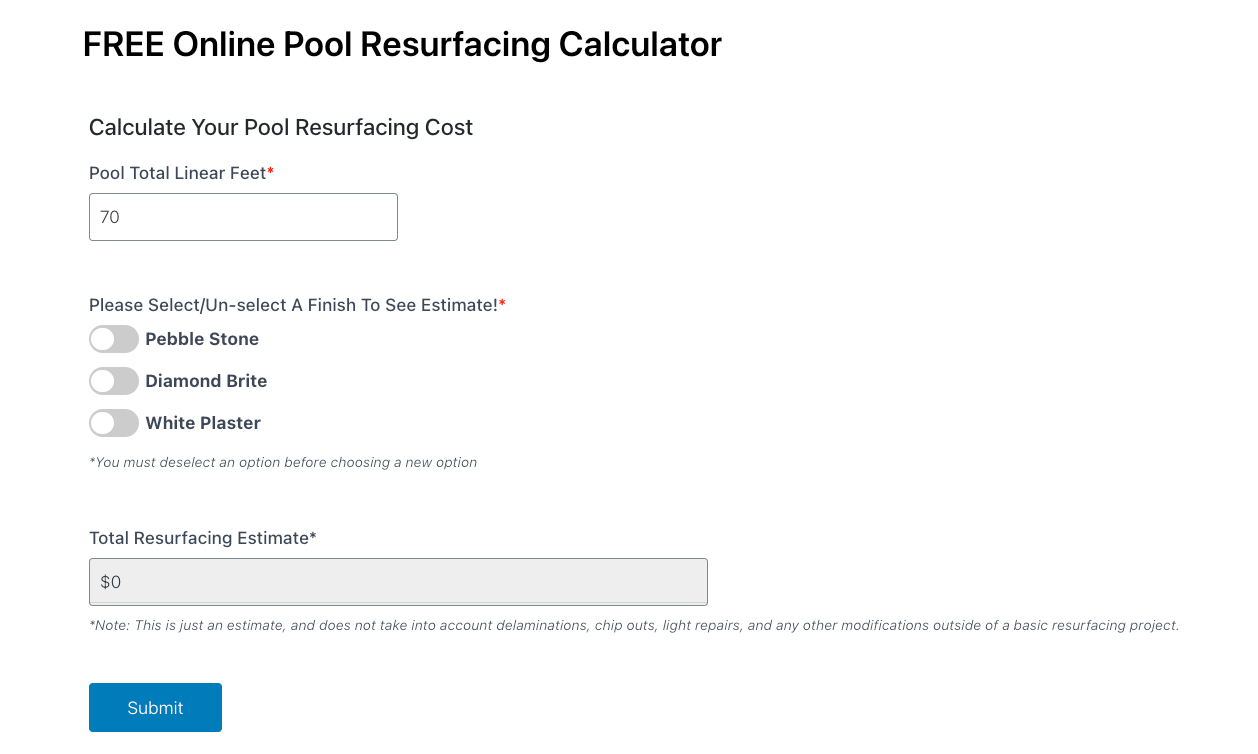
Curious about a more precise figure for your unique swimming pool? You can use our handy online Pool Resurfacing Cost Calculator right on our website. Just plug in your pool’s dimensions and preferred resurfacing material, and it will give you a good estimate for your project. This tool helps most pool owners get a quick sense of their investment. For an exact quote, we invite you to connect with us directly.
FAQs
What is the average cost of resurfacing a pool?
The average cost varies widely. For a typical residential pool, you might expect anywhere from $5,000 to $15,000, depending on the pool type, size, and the resurfacing material chosen. Plain plaster is usually on the lower end, while pebble tec or glass tile will be higher.
Is pool resurfacing worth it?
Resurfacing a pool significantly extends its lifespan, prevents leaks, and dramatically improves its appearance. It transforms a tired swimming pool into a vibrant backyard oasis, boosting your property value and your enjoyment. Think of it as a major renovation for a fraction of the cost of building a new pool.
How often does a pool need to be resurfaced?
It depends on the material and how well you maintain your pool water. Plain plaster usually lasts 7-10 years. Quartz finishes can go for 10-15 years, while pebble tec or exposed aggregate plaster can last 15-20 years or even more. Fiberglass pools might need a new gel coat every 10-15 years.
What is the best type of pool resurfacing?
The “best” type really depends on your budget, desired look, and how much texture you prefer.
–Plain plaster is classic and affordable.
–Quartz offers durability and color.
–Pebble Tec gives you a highly durable, natural look with excellent longevity.
–Glass tile is for unmatched luxury and design. We help you pick the best resurfacing material for your specific needs.
What is the difference between replastering and resurfacing a pool?
“Replastering” specifically refers to applying a new layer of plaster to a concrete pool. “Resurfacing” is a broader term that encompasses replastering, but also includes applying other finishes like pebble tec, quartz, or even refinishing fiberglass pools or replacing vinyl liners. Essentially, replastering is a type of resurfacing for concrete pools.


